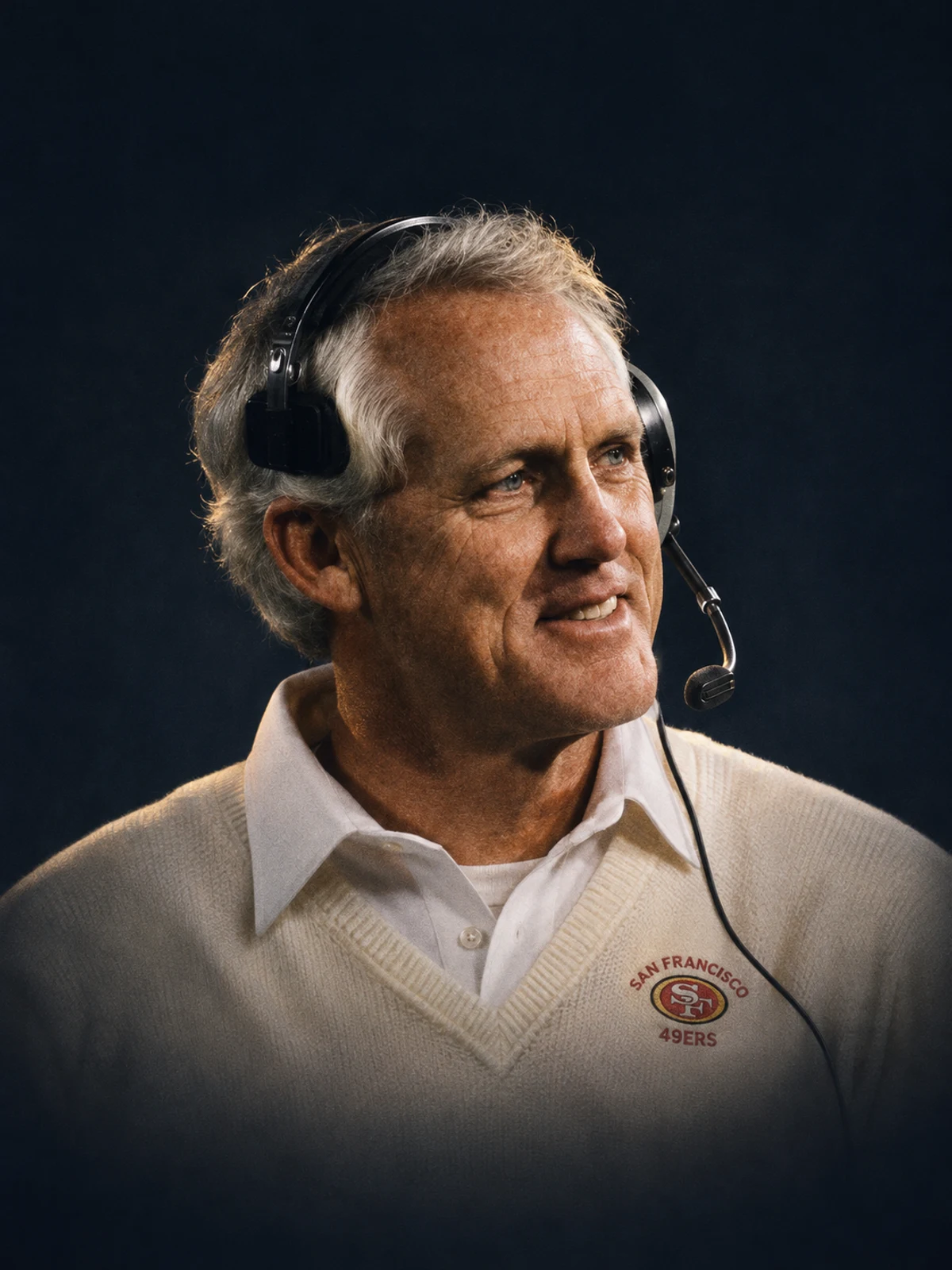
A system is easy to admire after it has worked. Bill Walsh took responsibility for one before success could make it look inevitable. When he became head coach and general manager of the San Francisco 49ers in 1979, the organisation was coming off a 2–14 season. His subsequent career offers a compelling study of how preparation and design can change the range of outcomes a team believes are possible.
Building from a difficult beginning
The Pro Football Hall of Fame records Walsh’s arrival in San Francisco, the team’s first championship under him in Super Bowl XVI and the two further Super Bowl victories that followed. His tenure produced three titles across ten seasons. The record establishes the scale of the achievement, while the rebuilding context keeps the story anchored in an actual leadership problem.
A struggling organisation needs more than a distant goal. People must understand what to do differently before they have a new result to reassure them. That makes the early work of a coach particularly demanding: expectations have to become actionable while uncertainty is still part of the room.
The offensive imagination
Walsh is closely associated with the West Coast offence and a passing approach built around timing, precision and the coordinated work of different players. His Hall of Fame profile also identifies his earlier work with quarterbacks including Ken Anderson and Dan Fouts, before the San Francisco years with Joe Montana. Player development sits alongside tactical design in the account of his influence.
That combination is important. A clever scheme has limited value if the people expected to use it cannot understand or execute it. A coach must connect the idea to instruction, practice and feedback. The system earns its place when it improves the decisions available to a player, rather than asking the player to admire the sophistication of the system.
Preparation as a shared language
For leaders outside sport, Walsh’s career offers a way to think about operational clarity. A team needs a shared understanding of what a good action looks like and how different responsibilities fit together. A process can reduce unnecessary uncertainty, leaving more attention available for the judgement a situation actually requires.
A business coach can explore that idea through a specific recurring task. Where do people lose time interpreting an expectation? Which handover is repeatedly misunderstood? What should be standardised, and where must a person retain discretion? These questions translate the interest in preparation into a discussion of work that can be observed and improved.
Development inside the design
Walsh’s reputation for developing quarterbacks also keeps the human subject in the picture. A person does not become effective simply by being placed inside a well-regarded framework. They need opportunities to practise, feedback they can use and a role that makes sense in relation to their capabilities.
This is a useful test for any coach who has fallen in love with a method. Can the learner explain why the method helps? Does it reveal progress, or merely produce compliance with the coach’s preferred vocabulary? Development becomes more durable when the person can carry an understanding into situations the coach has not anticipated.
A legacy that keeps working
Walsh’s influence continued through the coaches who worked with him and the offensive ideas associated with his teams. That is an expansive form of legacy: a body of practice capable of being taught, adapted and argued with by people facing a different game. Its value rests partly in what others could do with it.
His place in this collection recognises the connection between imagination and preparation. An ambitious idea becomes consequential through the unglamorous work of making it usable. For a coach, the aspiration is to leave people with more than an inspiring explanation. Leave them with a clearer decision, a better-practised skill and a system intelligent enough to support the person using it.
American Football
Bill Walsh
Bill Walsh was the San Francisco 49ers head coach who won three Super Bowls and became closely associated with the West Coast offence. His career connected offensive innovation, quarterback development and organisational preparation, leaving a lasting influence on American football coaching.
- Field
- American football
- Super Bowl titles
- 3
- 49ers head coach
- 1979–1988
Questions about Bill Walsh
How many Super Bowls did Bill Walsh win?
Walsh coached the San Francisco 49ers to victories in Super Bowls XVI, XIX and XXIII. The Pro Football Hall of Fame records three titles during his ten seasons as the team’s head coach.
What is Walsh’s connection with the West Coast offence?
He is closely associated with developing and popularising the approach, which emphasises timing, precision and a coordinated passing game. His influence also includes quarterback development and the coaches who carried his ideas into other teams.
Sources & credits
- Pro Football Hall of Fame — Bill Walsh ↗
- Bill Walsh — career and West Coast offence references ↗
- San Francisco 49ers — team history ↗
Updated 13 November 2026.