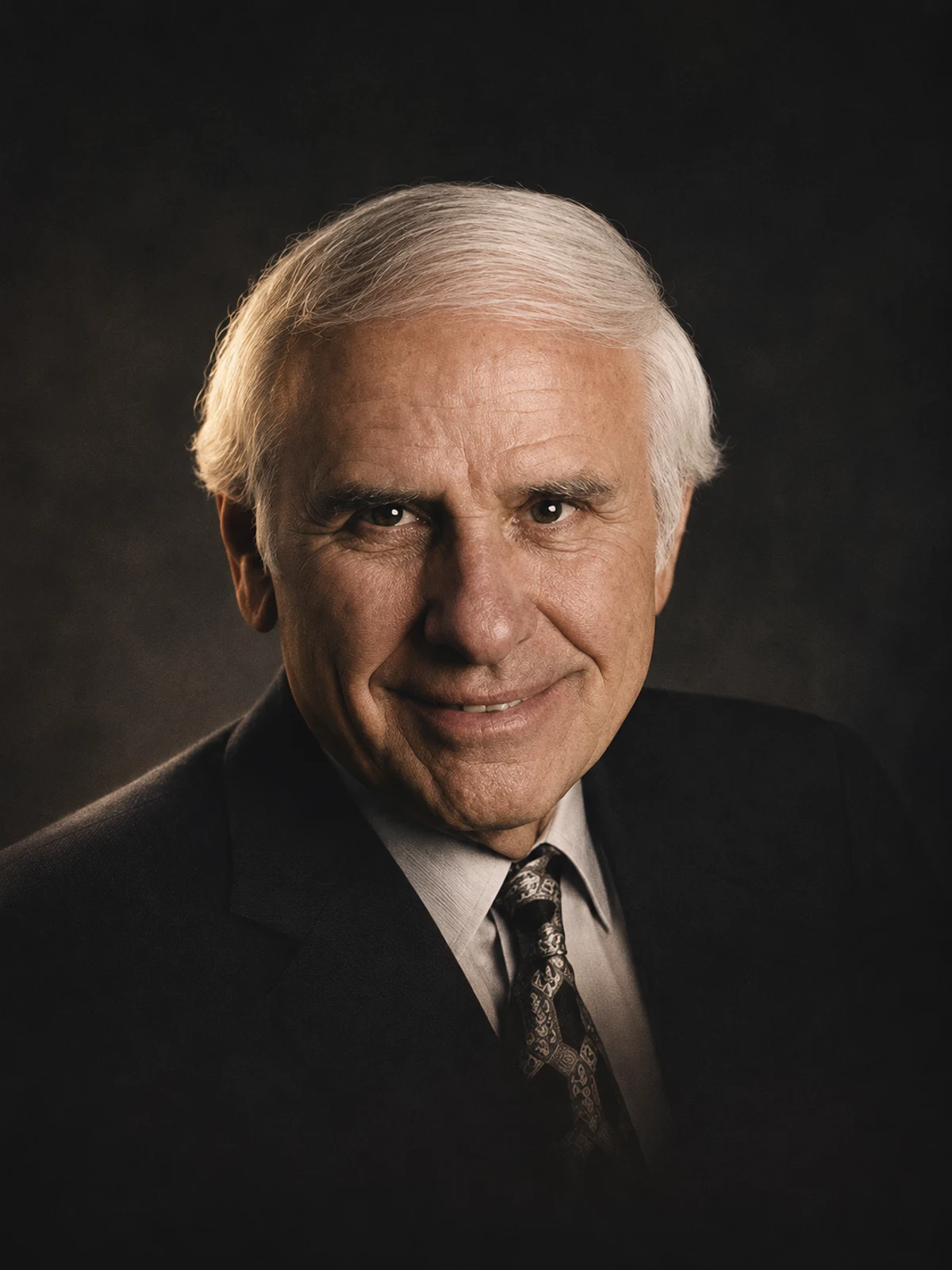
An ambition is easy to announce. A life is harder to organise around it. Jim Rohn made that distance his subject. He spoke about progress in a register that connected the large question of who a person wanted to become with the smaller question of what that person would do tomorrow. The result was a body of work that helped shape the vocabulary of personal development.
A philosophy with a human beginning
Rohn’s official biography describes a childhood on a farm in Idaho, a working life that began without an obvious route to prominence, and the influence of entrepreneur Earl Shoaff. It records his first public speaking opportunity at a Rotary Club in 1963. His subsequent career carried those ideas into seminars, books and recordings. The biographical arc explains why a mentor’s intervention became such an important part of his own teaching.
A turning point is compelling because it gives a story a shape. Yet the coaching value lies in what follows: the decisions, practice and revisions required to make a different direction real. Treating Rohn’s life only as an account of sudden transformation would miss his recurring concern with the work that continues after an inspiring conversation has ended.
What personal philosophy means
Rohn’s published teaching treats philosophy as a source of decisions. The term can sound abstract until it is placed beside an ordinary choice: what deserves attention, which advice to trust, how to respond to an error, and what a person is willing to postpone. A philosophy is consequential because it supplies an answer even when no one has stopped to name it.
That gives a coach a useful opening. Instead of beginning with an instruction to be more motivated, examine the assumptions behind a pattern. What does the client believe counts as progress? What do they assume will happen if they ask for help? A clearer assumption can support a better decision; an unexamined one can quietly undermine an otherwise sensible plan.
The attraction of discipline
In Rohn’s work, discipline links intention to repeated action. His official archive returns to the idea that consistent choices accumulate. This is one reason his language has travelled so widely through personal-development culture. It offers something a listener can attempt, long before a distant ambition can be measured.
The idea is strongest when a commitment is specific and proportionate to a real life. A useful daily practice must fit the resources, obligations and health of the person undertaking it. Coaches honour the practical force of discipline when they help a client design a repeatable action, notice what interrupts it and make an honest adjustment. Calling someone undisciplined rarely provides that level of information.
A voice carried forward
The Nightingale-Conant account of Rohn’s work describes his influence on younger figures in personal development, including Tony Robbins. His continuing presence through recordings also illustrates how teaching can outlive the room in which it was first delivered. Ideas become part of a professional culture when later teachers adopt, reinterpret or challenge them.
That influence deserves careful reading. A memorable sentence can create a moment of recognition, but a coaching relationship must also make room for detail. Two people may repeat the same principle and need very different forms of support. The craft lies in finding the next workable step for this person, under these conditions, with these consequences.
The ambition that remains
Rohn’s enduring appeal is tied to a generous possibility: a person can take a more active part in shaping a life. The useful application of that possibility also recognises circumstances and responsibilities that no slogan can remove. Agency grows through accurate attention to both the available choices and the constraints around them.
For a coach, the aspiration is to help a client leave with a decision they understand and can sustain. A compelling seminar may begin the conversation. What gives it weight is the ordinary day that follows: a little more clarity, a promise small enough to keep, and the willingness to return to the work without needing the world to applaud it first.
Personal Development
Jim Rohn
Jim Rohn was an American speaker, author and personal-development teacher whose work emphasised discipline, responsibility and personal philosophy. His seminars and recordings influenced later speakers, including Tony Robbins, and remain part of the language of modern life and business coaching.
- Field
- Personal development
- Life
- 1930–2009
- Central theme
- Philosophy into practice
Questions about Jim Rohn
What did Jim Rohn teach?
Rohn taught ideas about personal philosophy, responsibility, discipline and the habits behind progress. His books, seminars and recordings encouraged listeners to connect what they wanted from life with the choices they made repeatedly.
How did Jim Rohn influence coaching?
His language and teaching influenced later personal-development speakers, including Tony Robbins. His emphasis on daily habits and personal responsibility remains widely discussed in life coaching, business coaching and motivational education.