A person can know a subject and still struggle to speak about it. A leader can have an answer and still fail to reach the people who must act on it. Dale Carnegie built an enduring educational project around that gap. His contribution was to take communication seriously as a learnable practice, with consequences for confidence, professional relationships and the experience of being heard.
The classroom before the classic
Dale Carnegie Training traces its origins to 1912 and the development of public-speaking education. The chronology matters: the classroom preceded the famous book. The project grew from the practical difficulties people encountered when trying to express themselves, engage an audience and participate more confidently in professional life.
The organisation’s account of its heritage places How to Win Friends and Influence People in 1936. The book brought a much wider audience to an approach concerned with interpersonal behaviour. Its title is memorable, but the underlying field of interest is broader than social ease. It concerns how people understand one another when an idea, a request or a disagreement must pass between them.
Confidence made practical
Public speaking can appear to be a gift possessed by a fortunate few. An educational approach makes a different possibility available: skills can be practised, feedback can be given, and a learner can attempt something that once seemed beyond reach. The value lies partly in what happens to the person’s sense of participation. Someone who can contribute more clearly may find a wider role in a team or community.
A coach can apply that perspective without promising a complete personality transformation. It may be enough to help a client prepare one clear contribution, rehearse a difficult opening or explain an idea without burying it under qualifications. A visible improvement in a specific situation gives confidence a more dependable foundation than a general instruction to believe in oneself.
The other half of communication
Carnegie’s enduring association with human relations invites attention to the person receiving a message. The point of communication is not completed when a speaker has finished talking. There remains the question of what another person understood, what concerns they bring and whether the exchange has made useful cooperation more likely.
For coaching, that changes the quality of a leadership conversation. A client preparing to influence a colleague can examine the colleague’s responsibilities before polishing the argument. What would make the proposal workable from that position? Which uncertainty needs a real answer? Attention to those questions can improve the substance of a request as well as its delivery.
Influence and its responsibilities
The word influence carries an ethical demand. An effective technique can be used to clarify a shared problem or to pressure someone into serving another person’s interests. Coaches should make that distinction discussable. A relationship built through genuine attention is different from a performance of concern designed only to secure agreement.
This is where an older communication tradition remains open to contemporary judgement. Courtesy can coexist with candour. Listening can coexist with a firm boundary. Respect does not require a person to disguise a disagreement or give up a legitimate need. A mature application of interpersonal skill should make difficult conversations more honest, not simply more pleasant.
Why the human advantage lasts
Communication tools have changed dramatically since Carnegie’s first classes. The human difficulty remains recognisable: people want to be understood, particularly when the stakes are high. More channels do not automatically create more understanding. A short, thoughtful question can still do work that a long stream of messages has avoided.
Carnegie’s place in this collection recognises an educational idea with lasting reach: professional effectiveness includes the ability to engage another person with clarity and consideration. For a coach, the aspiration is to help that ability become dependable. The strongest communication leaves people better able to understand the task, name their concerns and take the next step together.
Leadership & Personal Development
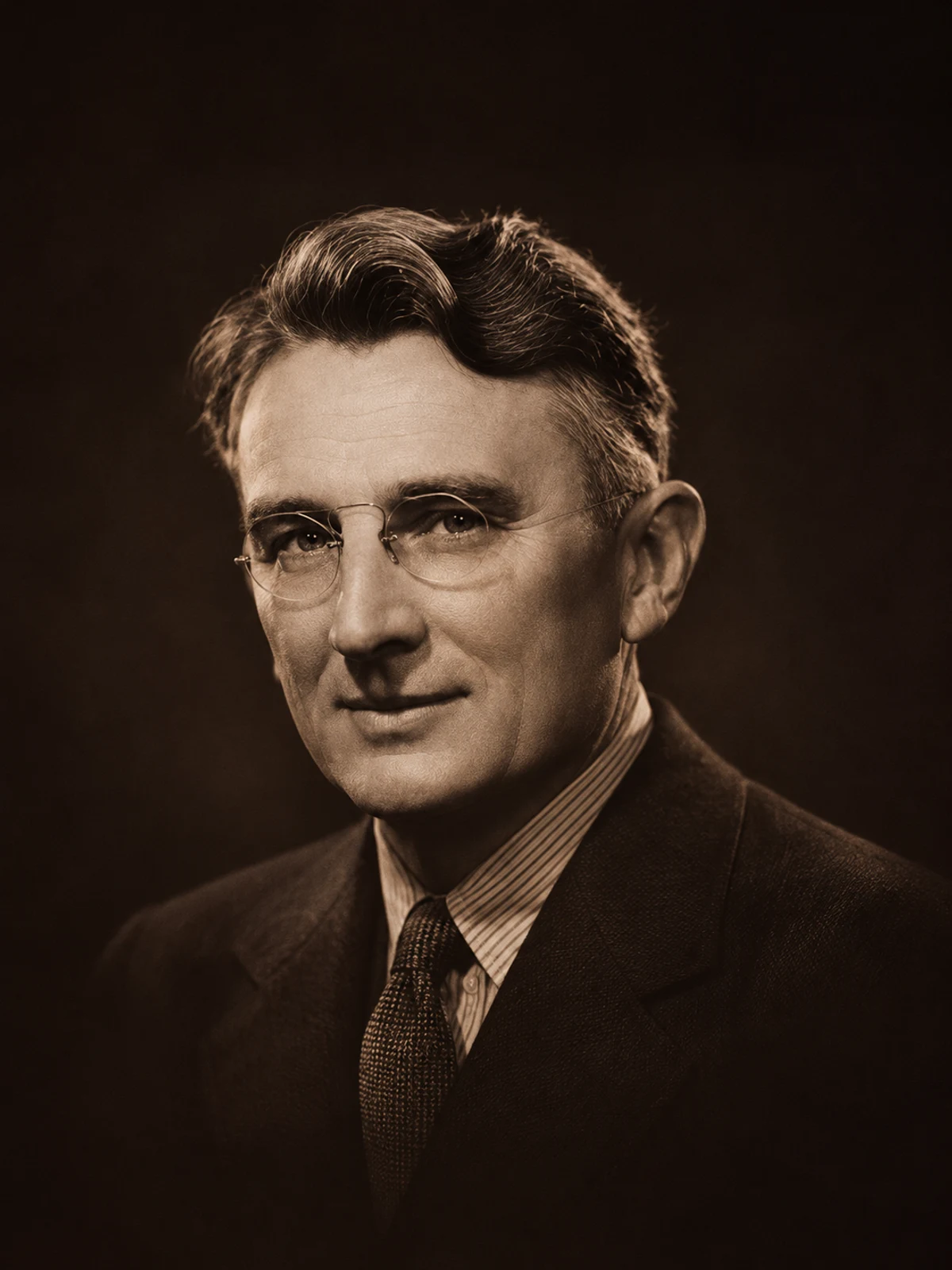
Dale Carnegie
Dale Carnegie was an American educator and author who began teaching public speaking in 1912. His 1936 book How to Win Friends and Influence People helped bring communication, confidence and human-relations skills into mainstream professional development.
- Field
- Communication & leadership
- Teaching began
- 1912
- Defining book
- How to Win Friends, 1936
Questions about Dale Carnegie
What is Dale Carnegie best known for?
Carnegie is best known for How to Win Friends and Influence People, first published in 1936, and for the communication and human-relations training associated with his name. His teaching began with public-speaking classes in 1912.
How is Carnegie relevant to coaching?
His work provides a starting point for discussing confidence, listening and interpersonal communication. A coach can use those themes to help a client prepare clearer contributions, understand other perspectives and handle difficult conversations responsibly.
Sources & credits
- Dale Carnegie Training — heritage ↗
- Dale Carnegie Japan — origins of the leadership course ↗
- Encyclopedia.com — Dale Carnegie biography ↗
Updated 13 November 2026.