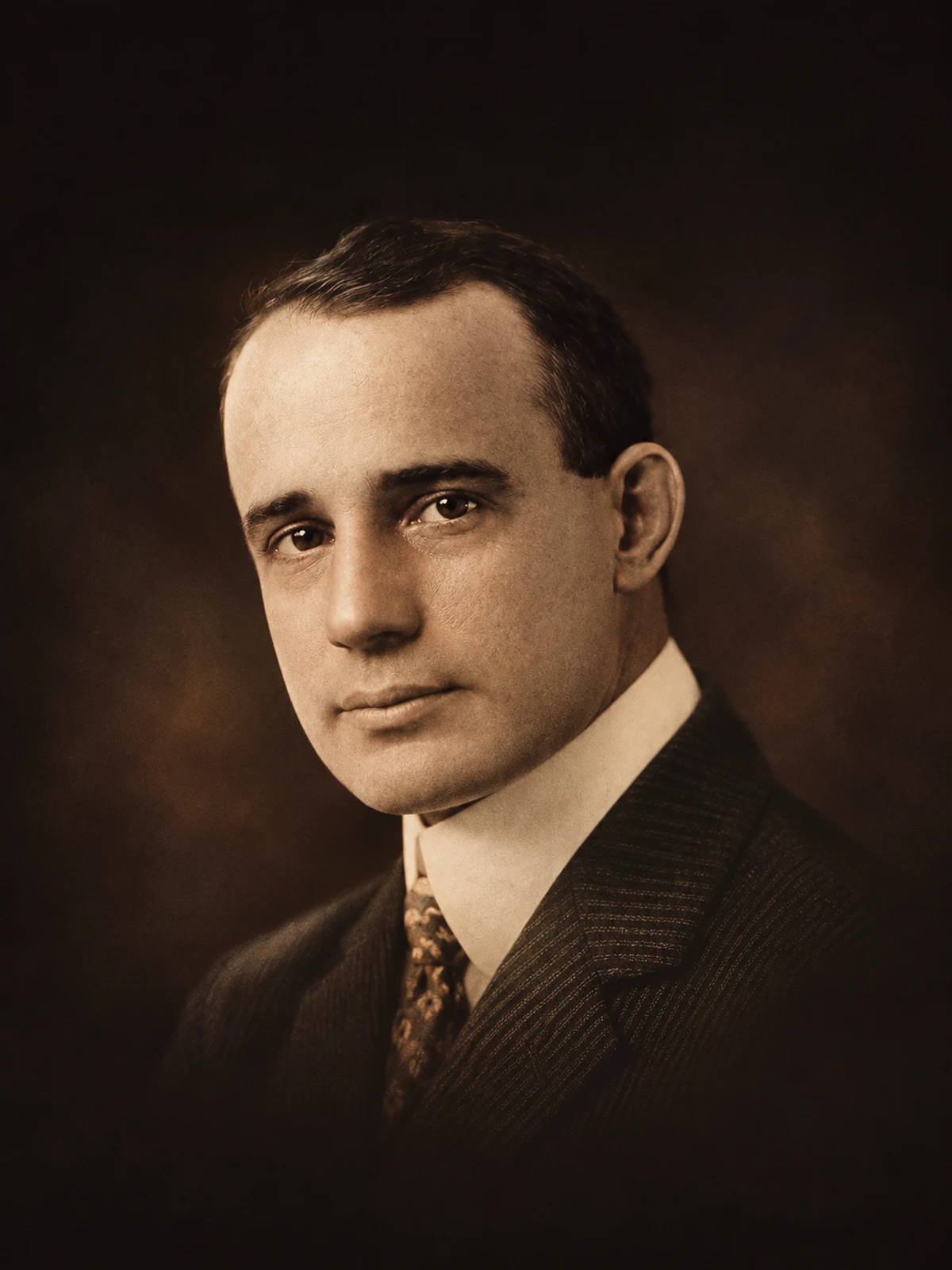
Some books enter a culture so thoroughly that their language begins to sound like common sense. Napoleon Hill’s Think and Grow Rich is one of them. Its ideas about purpose, belief and persistence have travelled through seminars, business conversations and the wider personal-development industry. That reach makes Hill a significant figure to examine, with the same care that an influential set of promises deserves.
The book and its place
The Napoleon Hill Foundation’s timeline records the publication of The Law of Success in 1928 and Think and Grow Rich in 1937. Those works sit at the centre of his reputation. The Foundation continues to present his philosophy of personal achievement, maintaining the connection between a historic author and a contemporary audience interested in ambition and self-direction.
An account maintained by a legacy organisation is valuable for understanding how an author’s work is presented. It also has a particular point of view. A reader studying Hill should distinguish a publication date from a promotional claim, and a useful question about personal conduct from a promise about what the world will deliver in return.
Why definite purpose appeals
A clear purpose gives effort a direction. That is an attractive proposition for anyone who feels busy without being certain what the activity is for. Hill’s writing made this language memorable and connected it with persistence, planning and the support of other people. The enduring appeal lies in the possibility that a life can be approached with more intention.
A coach can turn that broad idea into a more exact conversation. What does the client want to change? Why does it matter now? What would count as evidence that the plan is helping? These questions keep the discussion close to choices that can be examined. A purpose becomes more useful when the client can describe the next action and explain why it follows.
From belief to an examinable plan
Confidence can help a person begin a difficult task. It cannot by itself establish that a business model is viable, that a market exists or that another person will respond as hoped. Coaches who work with ambition should preserve this distinction. Encouragement is most valuable when it can coexist with accurate information.
A responsible application of Hill’s themes therefore includes review. A person may continue to care deeply about an aim while changing the route towards it. Persistence can describe a sustained commitment to learning, rather than a refusal to acknowledge what a failed attempt has shown. The quality of a plan improves when evidence is welcome before a crisis makes it unavoidable.
The responsibility of influence
Hill’s public legacy includes contested biographical claims and questions about the historical support for parts of his personal story. Readers should treat claims of famous relationships and sweeping research programmes as claims to verify, rather than as proof supplied by the author’s popularity. The biographical references linked below offer a starting point for that scrutiny.
This is part of taking an influential figure seriously. A coach’s responsibility extends to the ideas they repeat. A framework may provide a helpful prompt without becoming an established law of human behaviour. The client deserves to know when a proposition is a personal philosophy, a historical claim or a conclusion supported by appropriate evidence.
A more demanding kind of aspiration
Hill’s place in this collection recognises the reach of his work and the continuing conversation it creates. Influence is a reason to study a figure; it is not an instruction to accept every claim. A thoughtful reader can examine the appeal of purposeful action while declining to turn wealth into a test of someone’s moral worth or strength of belief.
The enduring coaching opportunity is to help ambition become more precise. Name the purpose, examine the assumptions, invite useful collaboration and review what happens. The result is a form of aspiration that can survive contact with reality: hopeful enough to begin, disciplined enough to act, and honest enough to learn.
Success & Personal Development
Napoleon Hill
Napoleon Hill was a personal-development author best known for Think and Grow Rich, published in 1937. His work popularised ideas about definite purpose, persistence and organised collaboration. His influence should be distinguished from scientific evidence for claims that belief alone produces financial success.
- Field
- Personal development
- Defining book
- Think and Grow Rich
- First published
- 1937
Questions about Napoleon Hill
When was Think and Grow Rich published?
Think and Grow Rich was first published in 1937, according to the Napoleon Hill Foundation’s timeline. It followed Hill’s earlier work The Law of Success, published in 1928.
How should coaches use Hill’s ideas?
They can use themes such as purpose and persistence as prompts for discussion while checking factual claims and testing plans against evidence. Hill’s personal philosophy should not be presented as a scientific guarantee of wealth or success.