The challenge of winning changes once a team has learned to expect it. Success creates habits, loyalties and a persuasive argument for leaving things alone. Sir Alex Ferguson’s remarkable achievement was to sustain ambition while repeatedly changing the people through whom it was expressed. His Manchester United career asks what a leader must preserve, and what they must be prepared to renew, when a successful past begins to exert its own authority.
A record across generations
Ferguson managed United from 1986 to 2013. The Premier League records thirteen league titles, including the inaugural Premier League season and his final season in 2012–13. UEFA records his Champions League victories in 1999 and 2008. The distance between those achievements is part of their significance: success had to be rebuilt through changing squads and circumstances.
His record before United also matters. UEFA’s profile describes the Scottish titles and the 1983 European Cup Winners’ Cup achieved with Aberdeen. It places the later story within a longer career of challenging established expectations. A coach studying Ferguson should therefore consider both the creation of belief and the responsibility of sustaining it after belief has become familiar.
Renewal within continuity
The Premier League’s Hall of Fame account highlights repeated squad rebuilding and the development of homegrown talent alongside international players. That combination makes renewal a human problem as much as a strategic one. Each new player enters an organisation with a history already being carried by others.
The leadership question is how newcomers learn the standard while still being allowed to contribute something the group does not yet possess. Too little continuity leaves a team without a shared reference. Too little openness turns its strongest traditions into a limit. A coach can help a leader examine which principles remain useful and which routines are being protected mainly because they are familiar.
The horizon beyond the next result
Elite football is organised around immediate judgement. A long managerial tenure must also attend to development whose value will emerge later. Ferguson’s career makes that tension unusually visible. Building a future team requires decisions that cannot be explained entirely by the needs of the next match.
A modern executive faces a recognisable version of the problem when developing people or changing an organisation. What must be delivered now? What capability will be needed later? Who is being given the opportunity to acquire it? These questions help a coaching conversation hold the short and long horizons together, without pretending that the pressure of either one can simply be ignored.
Authority with awareness
Ferguson’s public image is often reduced to intensity. UEFA’s account also includes testimony about his delegation and football understanding. That broader picture is important because the visible expression of authority rarely explains the whole structure of work behind it. Staff, players and the allocation of responsibility all belong in the story.
For coaches, the useful exercise is to move from personality towards function. Which decisions need the leader’s direct attention? Where does someone else have better information? How does the leader learn that an assumption has become outdated? A style that once produced a result should remain open to examination, especially when its success makes others reluctant to question it.
The standard that can travel
United’s longevity under Ferguson does not provide a formula that another organisation can copy intact. It provides a demanding case to study. The record links sustained expectations with repeated changes in personnel, and ambition with the development of people capable of carrying it forward.
That is why his place in this collection feels larger than the trophy count. A leader can win with a particular group; building the conditions for another group to succeed is a further achievement. For a coach, the enduring aspiration is to help someone recognise when continuity is serving the future and when the future requires the courage to begin again.
Football
Sir Alex Ferguson
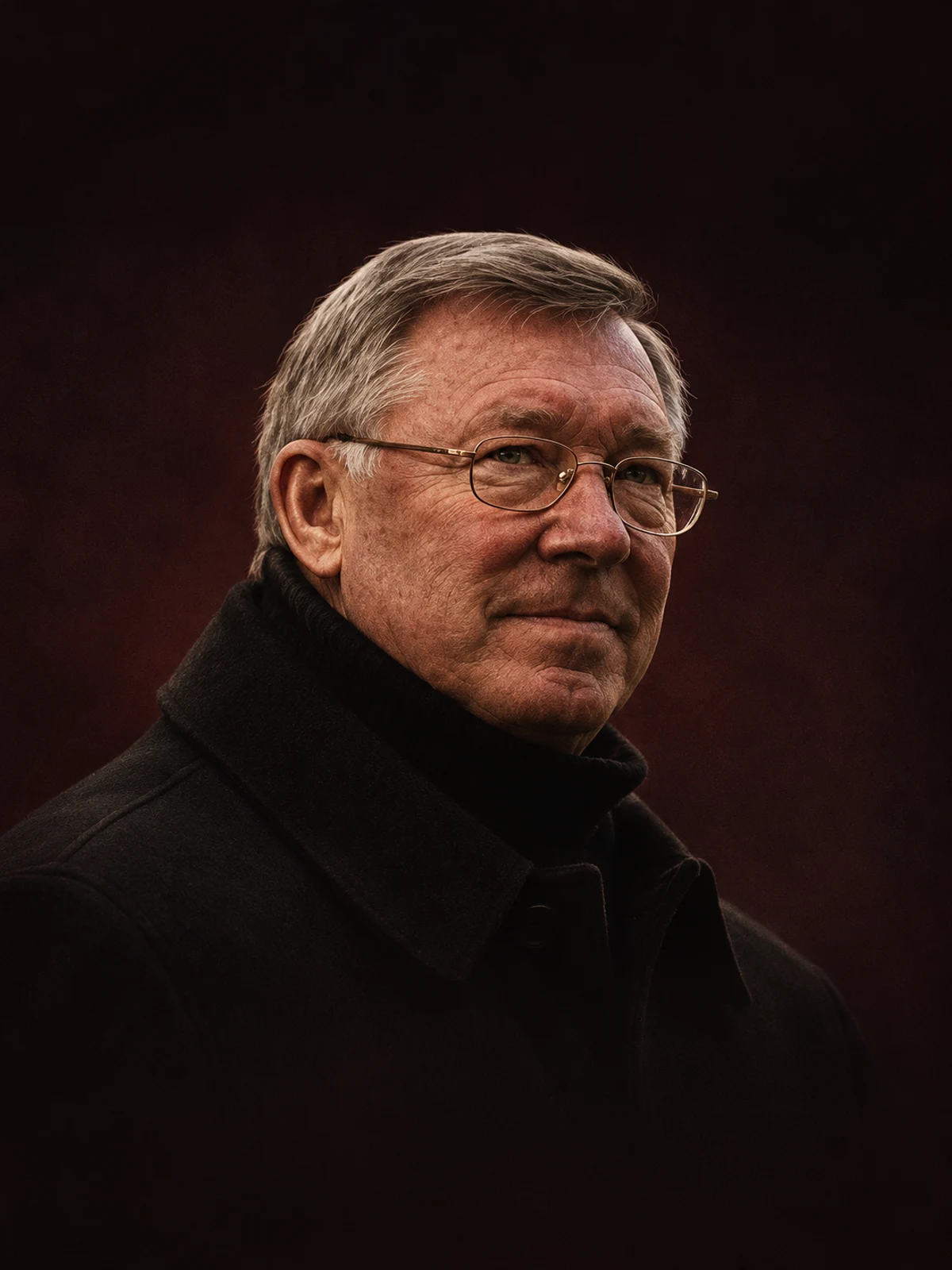
Sir Alex Ferguson managed Manchester United from 1986 to 2013, winning thirteen Premier League titles and two UEFA Champions Leagues. His career is studied for long-term team-building, player development and the ability to renew a successful organisation across generations.
- Field
- Football & leadership
- United manager
- 1986–2013
- Premier League titles
- 13
Questions about Sir Alex Ferguson
How long did Sir Alex Ferguson manage Manchester United?
Ferguson managed Manchester United from 1986 until 2013. His tenure included thirteen Premier League titles and UEFA Champions League victories in 1999 and 2008.
What makes Ferguson relevant to leadership coaching?
His career provides a long-term case for studying team renewal, development and sustained expectations. Coaches can use it to explore how a leader balances immediate performance with the future capability of an organisation.
Sources & credits
- Premier League — Ferguson’s Hall of Fame induction ↗
- UEFA — Sir Alex Ferguson in profile ↗
- Manchester United — club history ↗
Updated 13 November 2026.